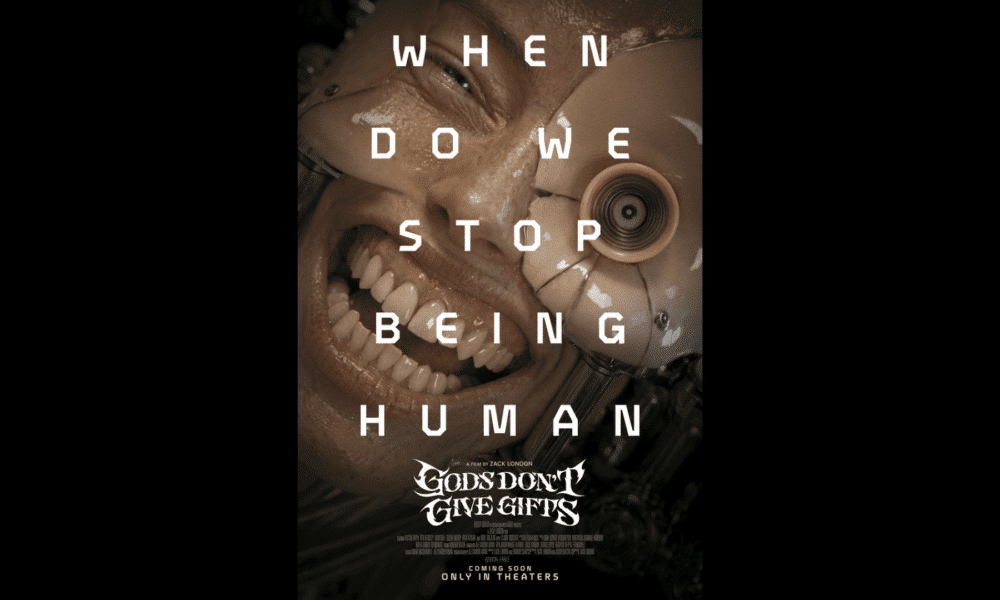
AI-generated advertising has moved from experiment to production workflow faster than the industry has agreed on how audiences should be told.
A new study from synthetic-media detection company Resemble AI adds useful data to that tension.
According to reporting on the study, Resemble analyzed 37,768 image and video files from 15,433 ads in Meta’s public Ad Library. Its Detect system flagged 3,379 files—8.9%—as AI-generated or manipulated. In a subset of files run from brands’ own pages, 6.9% were flagged.
The study also reported that explicit AI disclosure in the ad copy appeared in only a tiny fraction of flagged files.
There is an important caveat before anyone turns those numbers into a scandal.
AI detectors are probabilistic tools. A “flag” is not the same thing as forensic proof that every file was generated by AI. False positives and ambiguous edits are possible. The findings should be read as a signal about the scale and opacity of synthetic creative, not a definitive verdict on every individual advertiser.
Even with that caution, the business problem is real.
Brands are entering an era in which audiences increasingly have to ask: Is this real, altered, simulated, or somewhere in between?
That uncertainty changes content strategy.
The issue is not simply whether AI was used
Most modern advertising already contains extensive manipulation.
Images are retouched.
Backgrounds are replaced.
Color is graded.
Voice is processed.
Scenes are composited.
Products are rendered.
Actors perform fictional situations.
The audience has never expected an advertisement to be a raw documentary record.
Generative AI changes the degree and cost of manipulation.
A brand can now create people, environments, voices, product demonstrations, testimonials, or “camera footage” that never existed in front of a camera.
That makes the disclosure question more consequential.
The issue is not “Was AI anywhere in the workflow?”
The useful question is:
Did AI materially change what the audience is being asked to believe?
A good disclosure policy should focus on deception risk
Consider several uses of AI.
A production team uses generative fill to extend a background after a crop.
An editor removes a distracting object.
A brand generates a conceptual illustration showing an impossible future city.
A company creates a realistic fake customer testimonial.
These are not ethically equivalent.
A sensible internal policy can classify uses based on what they imply.
Low deception risk: cleanup, resizing, translation support, ideation, non-photorealistic conceptual artwork.
Moderate risk: realistic environments, altered wardrobe, synthetic b-roll, reconstructed product scenes.
High risk: generated people presented as customers, fabricated endorsements, simulated documentary footage, altered statements, fake before-and-after results, or synthetic media that could reasonably change a purchasing decision.
The higher the risk, the stronger the need for disclosure and review.
Trust is now part of production quality
Brands traditionally measure content quality through polish.
Does it look expensive?
Is the lighting good?
Does the edit move?
Is the typography on-brand?
AI adds a new quality dimension: credibility.
A highly polished ad can fail if the viewer feels manipulated.
This matters especially for professional services.
A physician, attorney, financial advisor, real-estate professional, educator, or consultant trades heavily on trust.
Synthetic media that creates ambiguity around expertise, results, identity, or real-world experience can damage more than one campaign.
It can damage the credibility of the person behind the brand.
The disclosure gap may be partly a workflow problem
Many companies do not have one clear “AI content” process.
A copywriter uses one model.
A designer uses another.
An agency generates backgrounds.
A contractor creates a voiceover.
A media buyer resizes and adapts creative automatically.
By the time the ad runs, no single person has a complete provenance record.
That creates a governance problem even when nobody intended to mislead.
Brands need a basic chain of custody for synthetic media.
At minimum, the content record should answer:
- Which assets were generated or materially altered?
- Which tool produced them?
- Was a real person’s face or voice involved?
- Was consent obtained where necessary?
- What factual claims appear?
- Does the output create a false impression of a real event?
- Does the platform require a label?
- Does the brand’s own disclosure policy require one?
- Who approved the final asset?
This sounds bureaucratic until a controversial ad is live.
Then it becomes essential.
Provenance will matter more than detection
Detection systems try to infer whether media is synthetic after the fact.
Provenance systems try to preserve information about where media came from and how it changed.
The latter is strategically stronger.
If a brand can maintain verifiable records from capture through edit, it does not have to rely entirely on an outside detector guessing what happened.
Content credentials and related provenance standards are still developing, and adoption is uneven.
But the direction is sensible.
The future of trustworthy production is likely to include both creative freedom and better records.
Creators face a different but related risk
Individual creators are often both the talent and the brand.
That makes imitation unusually damaging.
If someone generates a fake video of a creator recommending a product, audiences may attribute the endorsement to the real person.
If a creator’s visual style is copied at scale, the economic impact may be difficult to address with traditional copyright mechanisms.
If an AI voice replica appears in ads, the audience may not know which messages were authorized.
Creators should therefore treat likeness, voice, source files, raw footage, and licensing terms as business assets.
Brand contracts should become more explicit about whether a sponsor can train models on content, synthesize new performances, extend a campaign with generated likeness, or reuse footage beyond the agreed term.
AI can still make production dramatically better
The right response is not to prohibit AI from every marketing workflow.
That would ignore legitimate efficiency.
AI can help with:
- transcription
- captions
- rough cuts
- silence removal
- translation
- ideation
- shot planning
- color and audio cleanup
- resizing
- metadata
- research organization
- content versioning
- accessibility
These uses can make professional production more accessible without deceiving the viewer.
The strategic objective should be augmentation without ambiguity.
What businesses should never automate blindly
Anything that functions as evidence deserves additional scrutiny.
Customer testimonials.
Case-study outcomes.
Medical explanations.
Financial claims.
Legal guidance.
Product demonstrations.
Before-and-after visuals.
News-style footage.
Expert quotations.
If AI touches those categories, a human should be able to explain exactly what changed.
A brand should never discover after publication that a model invented a claim or created visual “proof” that did not exist.
PHQ Insights: what this means for creators and clients
For businesses: Create an AI-content policy before you need one. Define acceptable uses, review requirements, and disclosure thresholds.
For creators: Protect your voice and likeness contractually. Sponsor permission to use a video should not automatically mean permission to generate new performances from it.
For agencies: Track synthetic assets as part of the project record. Provenance is becoming production metadata.
For audiences: A disclosure does not automatically make content untrustworthy. It gives the viewer context needed to evaluate what they are seeing.
A simple PHQ rule for content teams
Ask one question before publishing:
Would a reasonable viewer make a different judgment about this content if they knew how it was created?
If the answer is yes, disclosure deserves serious consideration.
A conceptual AI illustration is one thing.
A generated “customer” praising a service is another.
The closer synthetic media gets to evidence, endorsement, identity, or factual reality, the less comfortable a brand should be with silence.
The competitive opportunity is authenticity
As generative media becomes abundant, real access becomes more valuable.
A real founder in a real studio.
A real physician answering a real question.
A real customer telling a verifiable story.
A real business shown operating.
A real guest reacting in the moment.
Those assets are harder to counterfeit convincingly at scale because their value is not only visual.
They contain relationship, context, expertise, and history.
Brands should use AI to make those real stories easier to produce and distribute—not to replace the thing audiences trusted in the first place.
What to watch next
Expect platforms, regulators, advertisers, and creators to continue arguing over the line between editing, synthetic media, and material deception.
Detection technology will improve.
So will generation.
That arms race makes disclosure and provenance more important, not less.
The future of premium content will not be defined by whether AI touched the file.
It will be defined by whether the audience can still trust what the file asks them to believe.
Sources
Primary reporting and supporting material used for this article.