Miami’s music economy is often described through artists.
The infrastructure around the artists may be just as important.
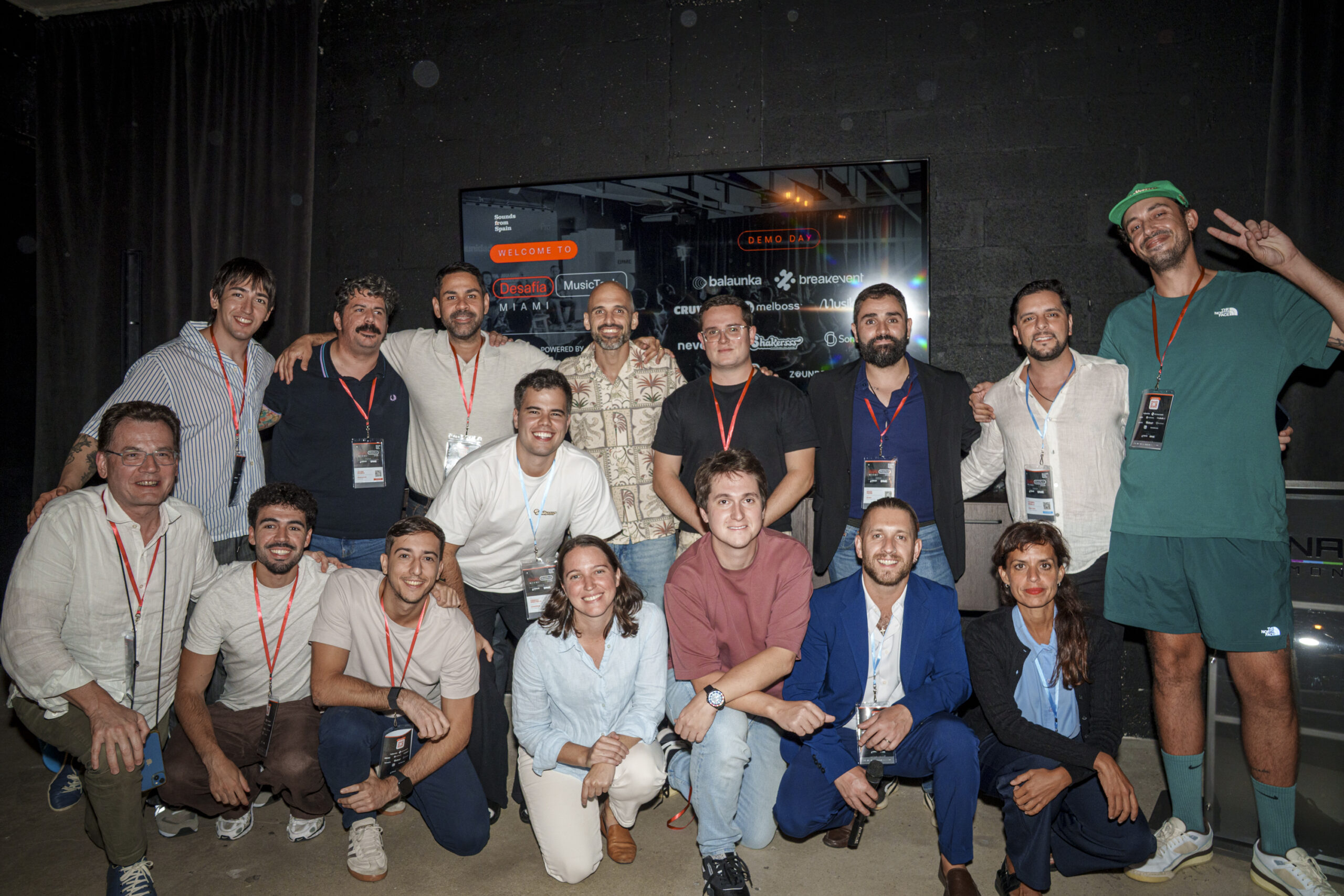
Ten Spanish music-technology companies spent two weeks in Miami this month through Desafía MusicTech Miami 2026, an international immersion program promoted by ICEX and Red.es and supported by BIME and Mana Tech.
The program combined business training, mentorship, investor and industry meetings, visits to music businesses and recording studios, and participation in Billboard Latin Music Week.
That mix is telling.
Miami’s creative advantage is increasingly the intersection of technology, production, Latin culture, and U.S. market access.
A market is easier to understand from inside the room
A startup can research the U.S. music industry from Madrid.
It cannot replicate every relationship remotely.
Pricing expectations.
How labels buy.
How studios operate.
How artists discover tools.
How investors evaluate music technology.
How rights are discussed.
Which problems are urgent.
Immersion compresses that learning.
For a company entering a new market, one week of real conversations can challenge months of assumptions.
Studios are part of technology distribution
Why would a software startup visit a recording studio?
Because the studio is where the product meets workflow.
A music-tech company can build a technically impressive tool that creates friction for an engineer.
A creator tool can solve a problem no creator actually prioritizes.
A distribution platform can misunderstand how rights are handled on the ground.
Physical production spaces are testing environments.
They connect builders to the people doing the work.
That makes studios part of an innovation ecosystem, not only rental rooms.
Miami has a bilingual market advantage
Latin music is not a niche inside Miami.
It is structural to the city’s identity and global reach.
Companies can encounter Spanish-speaking creators, U.S. business infrastructure, Latin American networks, global labels, and international events inside one region.
That makes Miami a valuable market-entry bridge.
A Spanish startup can test how its product message changes for the U.S.
A U.S. company can build relationships into Latin markets.
A creator can operate in both languages.
That cross-border density is difficult to replicate.
Billboard Latin Music Week creates temporary industry density
Major events do more than sell tickets.
They concentrate people.
Artists.
Managers.
Labels.
Brands.
Technology companies.
Media.
Investors.
That creates business opportunities that exist because everyone is in the same city at the same time.
Local companies should plan around those moments.
A studio can offer interview production.
A brand can host a panel.
A creator can record a special series.
A startup can schedule demos.
An agency can create on-location content.
Event weeks become economic windows.
The companies that prepare capture more value
Showing up is not a strategy.
Before a major industry week, a business should know:
- who it wants to meet
- what it wants to learn
- what content it wants to capture
- what offer it is making
- how it will follow up
- what assets need to be produced
A podcast can be especially useful.
Inviting a target partner to a well-prepared interview creates a structured reason to spend 30 minutes together.
The conversation becomes media.
The relationship survives after the event.
This is a model for South Florida creators too
Creators often travel to industry events to “network.”
They can build a media plan instead.
Choose a theme.
Book five interviews.
Record short reaction clips.
Capture b-roll.
Write a recap.
Create a LinkedIn post.
Publish one long-form episode.
One event can produce a complete editorial package.
The creator leaves with assets and relationships.
Technology companies need storytelling help
Music-tech products can be difficult to explain.
Metadata.
Rights.
Distribution.
Workflow automation.
Audio processing.
Fan analytics.
AI.
A founder may understand the product deeply and still struggle to make it legible to artists or investors.
Content solves that.
A good demo shows the product in use.
A case study shows the outcome.
A founder podcast explains the market thesis.
A short clip answers one pain point.
A studio can help translate technical value into human media.
PHQ Insights: what this means for creators and clients
For music-tech companies: Show your product inside real creative workflows, not only software demos.
For studios: Treat international founders, labels, and creator-tech companies as potential clients and partners during major industry weeks.
For creators: Use events as structured content-production opportunities.
For South Florida businesses: Miami’s cross-border role can be an editorial advantage. Create for U.S. and Latin audiences intentionally.
Miami can become a place where creative technology is tested
The city already has creators.
Studios.
Events.
Brands.
Capital.
International traffic.
What turns those ingredients into an ecosystem is repeated interaction.
Programs such as Desafía bring companies into the network deliberately.
The next step is retention.
Do startups keep customers here?
Do they open offices?
Do they hire locally?
Do they return for partnerships?
Do creators adopt the tools?
That is how an event visit becomes economic infrastructure.
Local production companies should think beyond local clients
A South Florida studio can serve:
- visiting founders
- touring artists
- international companies
- conference speakers
- brands activating during event weeks
- executives entering the U.S. market
The physical studio becomes a content landing zone.
A company can arrive in Miami and leave with:
- founder interviews
- product demos
- social assets
- bilingual content
- sales videos
- press material
That is a stronger value proposition than “rent a room for two hours.”
Cross-border companies need localized content, not simply translated content
A Spanish startup entering the U.S. market can translate its website into English and still sound foreign to the buyer.
Localization is deeper than language.
The company may need to change examples, pricing context, proof points, sales terminology, legal assumptions, and even the way it explains the problem.
A product that makes immediate sense to a label executive in Madrid may need a different demonstration for an independent artist in Miami or a U.S. distributor.
Content is one of the fastest ways to test that message.
Record the founder explaining the product to three different audiences.
Turn common objections into short videos.
Interview a U.S. customer or advisor.
Build a case study around a local workflow.
Create Spanish and English versions that are written for each audience rather than mechanically translated.
The response to that content reveals where the positioning is clear and where it still needs work.
Studios can become market-entry partners
For visiting companies, a production studio can provide more than cameras.
It can become a temporary media headquarters.
A startup in Miami for one week could record:
- a founder story for U.S. investors
- a polished product demonstration
- bilingual social clips
- customer or partner interviews
- a podcast conversation about the market
- sales enablement videos
- recruiting material
- event-week reactions
That turns a short trip into a media library that continues working after the team flies home.
The opportunity is especially strong during periods such as Billboard Latin Music Week, Art Week, major technology conferences, and finance events, when international decision-makers are already concentrated in South Florida.
Studios that understand the business objective can help the company leave with both relationships and the content needed to follow up on them.
What to watch next
The Desafía cohort will eventually be judged by what happens after the program.
Which companies build U.S. relationships?
Which secure customers?
Which return to Miami?
Which partnerships persist beyond Billboard week?
The program nevertheless illustrates why South Florida’s creative economy deserves a broader definition.
Music is not only performers and venues.
It is software, rights, finance, production, distribution, events, and media.
Miami is increasingly a place where those layers meet.
Sources
Primary reporting and supporting material used for this article.