The smartphone made computing portable.
The next wave of AI founders is asking whether computing can become almost invisible.
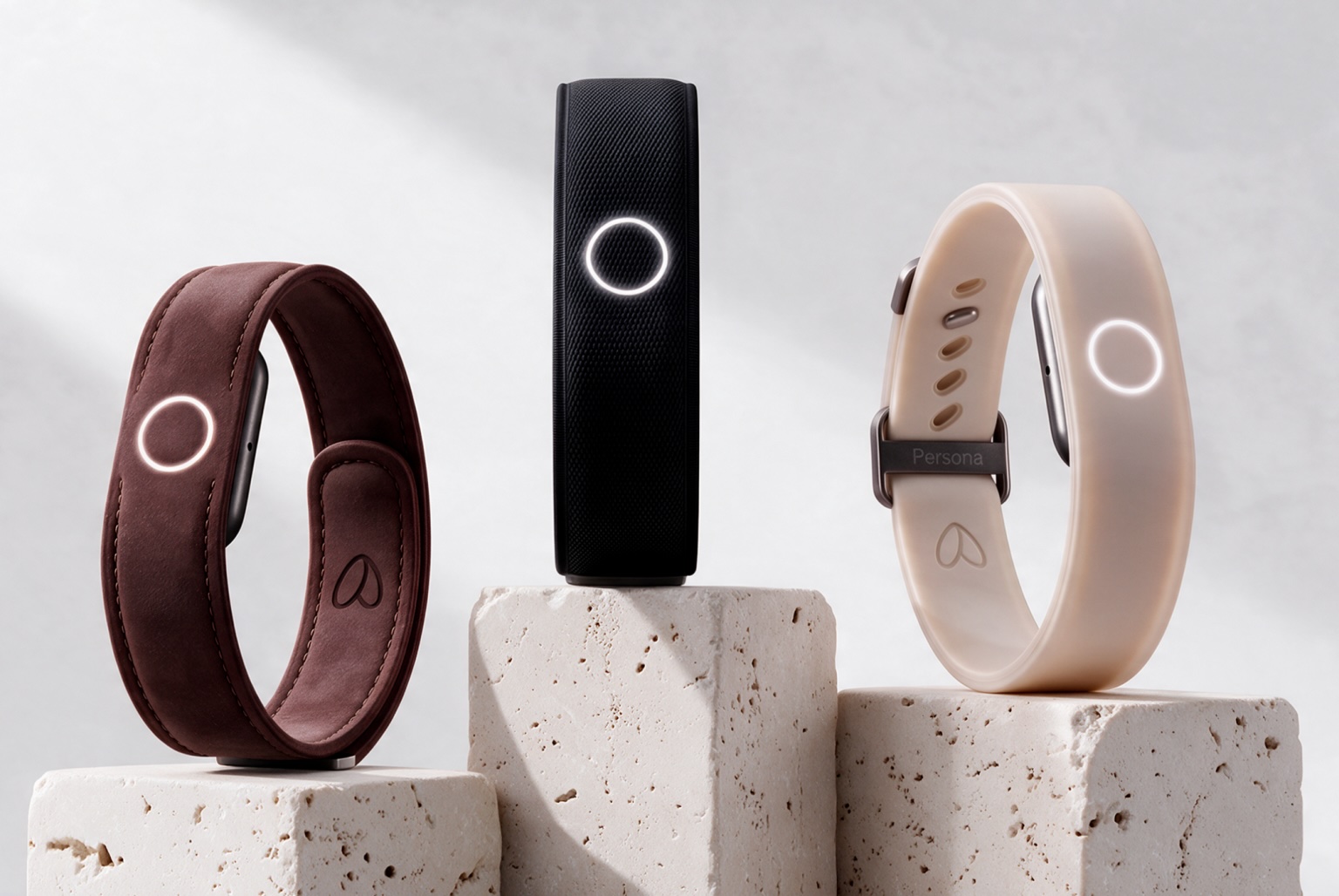
Miami-based entrepreneur Zach Yadegari has raised $10 million for Persona, a startup developing an AI assistant that can operate through iMessage and a $179 wristband.
Yadegari is 19.
He previously co-founded Cal AI, a calorie-estimation app acquired by MyFitnessPal in March 2026 after reportedly generating more than $30 million in annual revenue.
That background gives Persona unusual credibility for a company trying to enter one of the most difficult technology categories: consumer hardware.
The ambition is bigger than another chatbot
Persona is designed to complete tasks.
The vision includes things like:
- scheduling appointments
- replying to emails
- booking travel
- coordinating meetings
- making calls
- navigating websites
The wristband is intended to reduce the need to constantly pull out a phone.
That distinction matters.
The first generation of consumer AI products largely asked users to open an app and talk to a chatbot.
The next generation is trying to move toward delegation.
Instead of asking AI for instructions, the user asks it to perform the task.
Hardware creates a different relationship
A wearable can be available more naturally than a phone app.
That makes the interaction faster.
It also makes privacy more important.
Persona says the device will not continuously record the user’s surroundings and that purchases will require approval.
Those design choices address some of the concerns that have followed previous AI wearables.
Consumers are willing to trade some data for convenience.
They are much less comfortable when they do not understand what is being captured.
The product faces a brutal category history
AI hardware has attracted enormous attention and several high-profile failures.
The problem is not only technical.
A wearable has to justify:
- carrying it
- charging it
- learning it
- trusting it
- wearing it publicly
- paying for it
A smartphone already does many of the same things.
The new product must therefore be meaningfully easier, faster, or more useful.
“AI in a new object” is not enough.
Persona’s business model is unusual
The company reportedly plans to generate revenue partly through sponsored product recommendations rather than relying entirely on subscriptions.
That introduces an important tension.
If an AI assistant recommends products, consumers need to know whether the recommendation is based on what is best for them or what generated revenue for the platform.
This is the same conflict that search engines, social feeds, and marketplaces have managed for years.
AI agents make it more personal because the system may be acting on the user’s behalf.
Transparency will matter.
Miami is becoming home to more consumer-AI experimentation
South Florida’s technology ecosystem is often associated with fintech, enterprise software, and investment.
Persona adds a consumer-hardware angle.
That is useful for the region.
Healthy technology ecosystems are not built around one category.
They develop founders who:
- build
- exit
- reinvest
- start again
- hire locally
- bring investors back
Yadegari’s second act is part of that flywheel.
The founder story is itself a distribution asset
A 19-year-old founder who sold a high-growth company is naturally compelling media.
That creates attention Persona would otherwise have to buy.
But founder attention can become dangerous if it overwhelms product proof.
The company still has to answer the hard questions:
Does the assistant reliably complete tasks?
Does the wristband improve the experience?
Do users keep wearing it after the novelty fades?
Can sponsored recommendations coexist with trust?
Those are product questions, not storytelling questions.
PHQ Insights: what this means for consumers and clients
For consumers: Evaluate AI hardware by the job it removes from your life. A new device should save meaningful friction, not create another gadget to manage.
For founders: A compelling story gets attention, but retention comes from utility. Use the attention to demonstrate the product clearly.
For local businesses: AI agents may increasingly buy, book, compare, and schedule on behalf of customers. Make your business easy for both humans and automated systems to understand.
For PHQ clients: When launching an unfamiliar product, show it working. Demonstration content is often more persuasive than polished claims. Record use cases, founder explanations, FAQs, and real scenarios.
The rise of delegated commerce
If AI agents become trusted enough to act for consumers, marketing changes.
A company may need to persuade both:
the customer,
and the software helping the customer decide.
That places more value on:
- clear product information
- structured data
- reputation
- reviews
- transparent pricing
- credible content
Brands that are difficult to understand may become difficult for AI systems to recommend.
The PHQ perspective
Persona is early.
The wristband still has to prove that consumers want another device.
But the company is exploring an important shift.
AI is moving from “answer my question” toward “handle this for me.”
If that shift works, the interface may matter less over time.
The best assistant could become the one you barely notice.
For Miami, the $10 million round is another sign that local founders are attempting products with global consumer ambition—not only regional business software.
That broadens the ecosystem in a meaningful way.
The assistant will need permission architecture
A useful agent cannot simply have unlimited authority.
Users will need layers of control.
A low-risk task such as finding available appointment times can be automatic.
A financial purchase may require explicit approval.
A sensitive email may need review before sending.
The product experience will depend on making those permission levels understandable.
Too many confirmations destroy convenience.
Too few destroy trust.
Sponsored recommendations create a special responsibility
If Persona earns money when the assistant recommends certain products, disclosure has to be exceptionally clear.
A user asking an agent to “find the best hotel” expects help, not an invisible ad auction.
Sponsored options can coexist with useful recommendations, but the commercial influence should be visible.
Otherwise the assistant risks becoming less like an aide and more like a salesperson living on the wrist.
Businesses need to prepare for agent customers
If consumer agents become common, companies may receive inquiries from software acting for people.
That means websites and booking systems need to become easier to interpret programmatically.
Clear pricing, structured availability, accurate hours, documented policies, and accessible booking flows become more important.
Good digital operations become part of AI discoverability.
Hardware creates content challenges too
A new wearable is hard to explain with static copy.
Customers need to see how it is activated, when it listens, what the interface does, how approvals work, what happens when it fails, and how it fits into normal life.
Demonstration video becomes critical.
Companies building unfamiliar physical products should budget for education as part of product launch.
What to watch next
The first major signal will be actual delivery and retention.
Preorders prove curiosity.
Daily usage proves value.
Watch whether users keep wearing the band after the first month and which tasks they delegate most often.
Also watch privacy policy evolution as the product gains access to more services.
The Miami founder flywheel
Yadegari’s quick return to building after an acquisition is another example of experienced founders recycling momentum into the local ecosystem.
The value is not only the new company.
Teams, investors, and future founders learn from repeat operators.
If Persona succeeds, Miami gains another globally visible consumer technology company.
If it fails, the region still gains people with experience attempting a difficult category.
Both outcomes add capability.
Sources
Primary reporting and supporting material used for this article.